
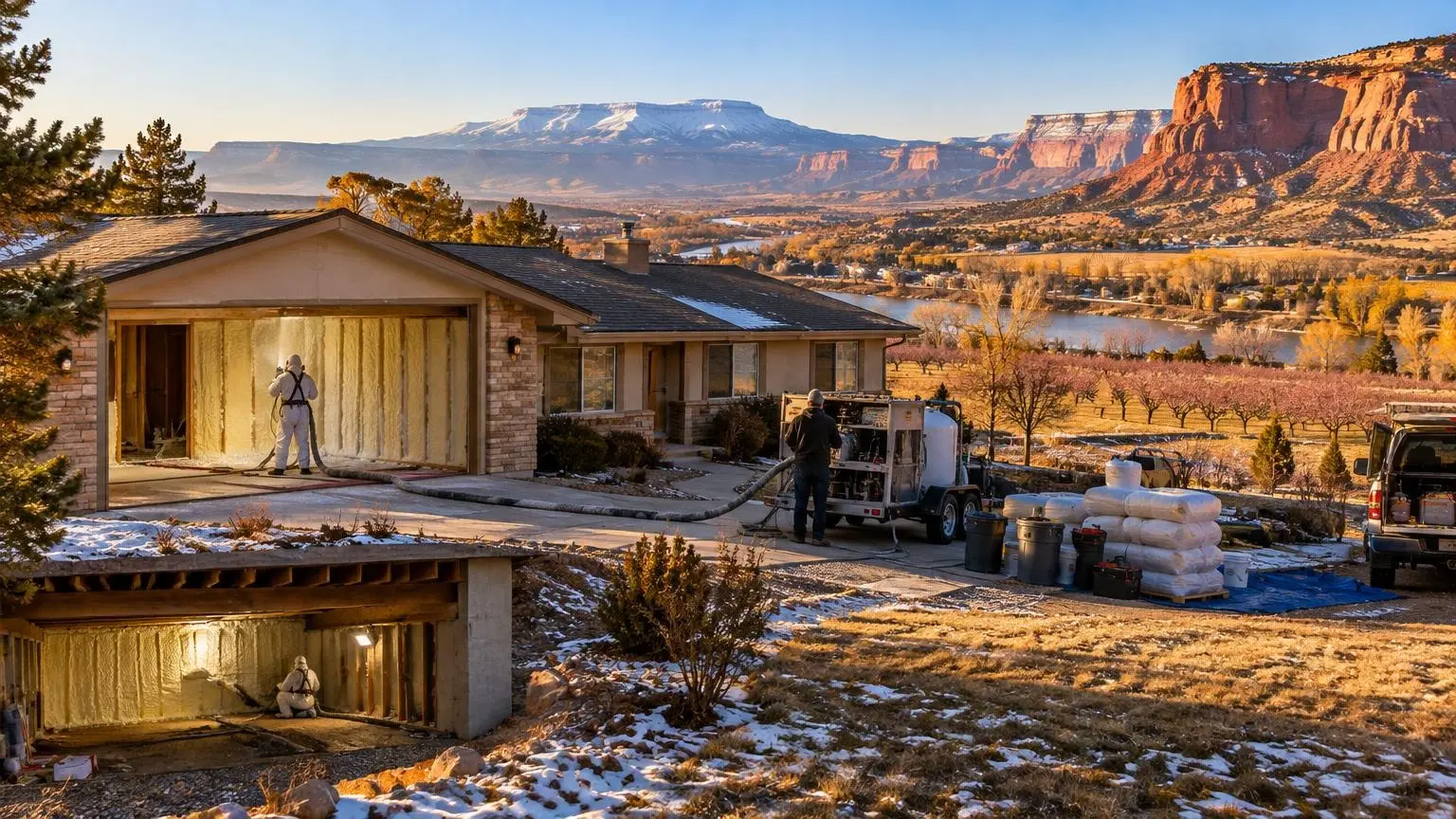
Stop the heat from rising out
Attic Insulation & Air Sealing in Grand Junction, CO
Seal the ceiling, then build the attic up toward R-60.
- Free on-site estimates
- Foam type, inches and R-value written out per area
- Air leaks, ducts and moisture checked before we insulate
Why the Attic Comes First in Winter
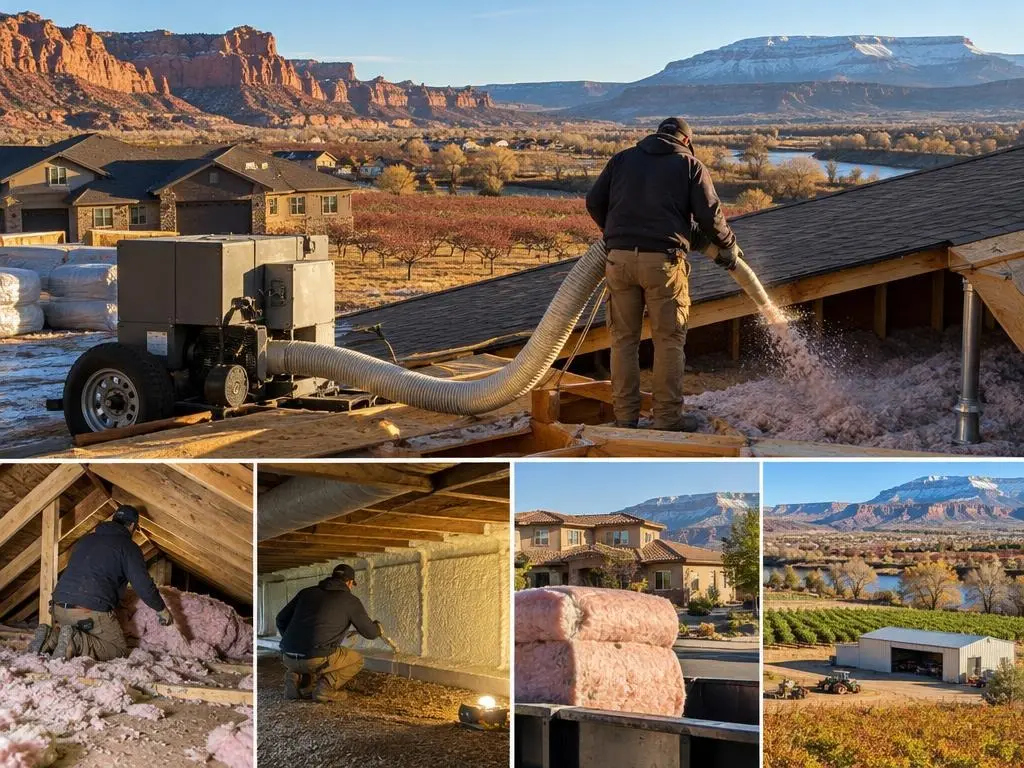
Attic insulation and air sealing gives most Grand Junction houses the biggest return. Warm air rises, and in winter it pushes out through every gap in the ceiling into the attic. That loss pulls cold outdoor air in at the bottom of the house to replace it. Sealing the ceiling cuts that cycle, and adding insulation on top slows the heat that still moves through. In summer the same work keeps attic heat from soaking down into the rooms.
The leaks we seal
- Open tops of interior walls and drilled top plates.
- Plumbing vents, flue chases and chimney gaps (with fire-rated material where required).
- Recessed light fixtures and bath fan housings.
- The attic hatch or pull-down stairs.
- Duct boots where registers meet the ceiling.
- Gaps where split-level and addition rooflines meet.
HomeGuide lists air sealing at $350 to $3,000. In a cold, windy winter it often makes more difference than the insulation.
How deep the attic should be
The 2021 IECC, which Mesa County began enforcing on September 1, 2025, lists R-60 for ceilings in Zone 5. ENERGY STAR recommends R-60 for an uninsulated Zone 5 attic and adding R-49 where three to four inches are already down. Many older Grand Junction attics have well under that: a few inches of old fiberglass or settled cellulose. We measure in several spots, since insulation is usually thinner at the eaves and around the hatch.
Ice at the eaves
Ice dams form when heat escaping into the attic melts snow on the roof, and the water refreezes at the colder eaves. Grand Junction's roughly 17.7 inches of snow a year is modest, but higher-elevation homes on Glade Park, in Collbran and near Grand Mesa see more. The fix is mostly air sealing and enough insulation to keep the roof deck cold, plus baffles that keep soffit vents open.
Blown-in or foam
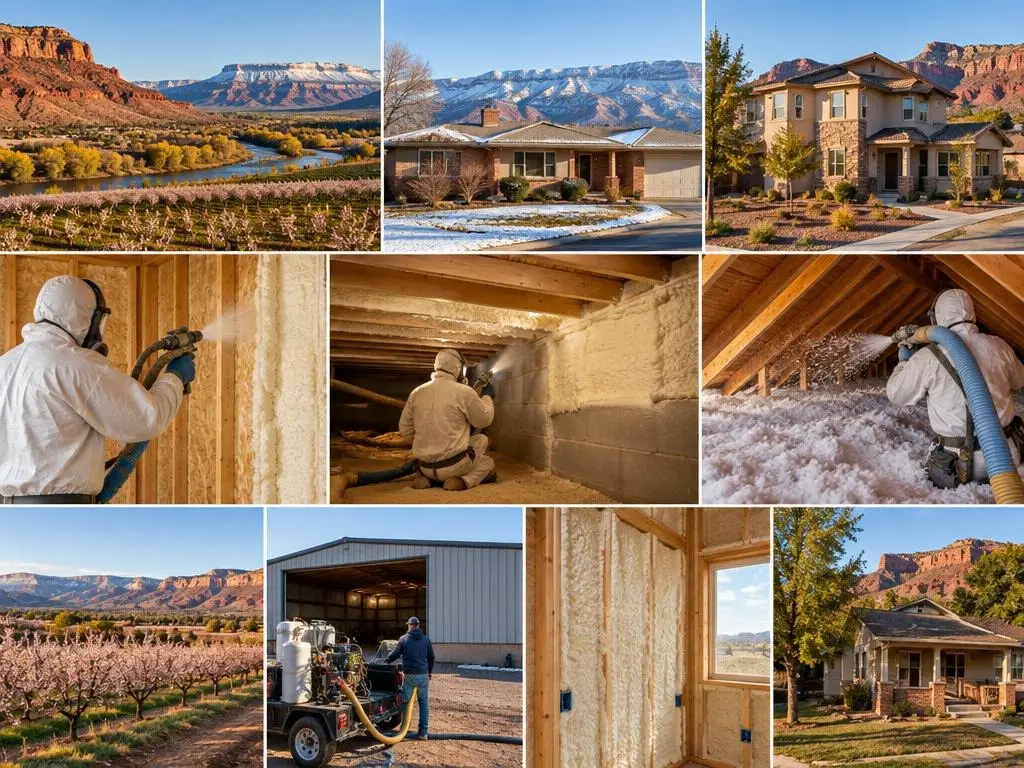
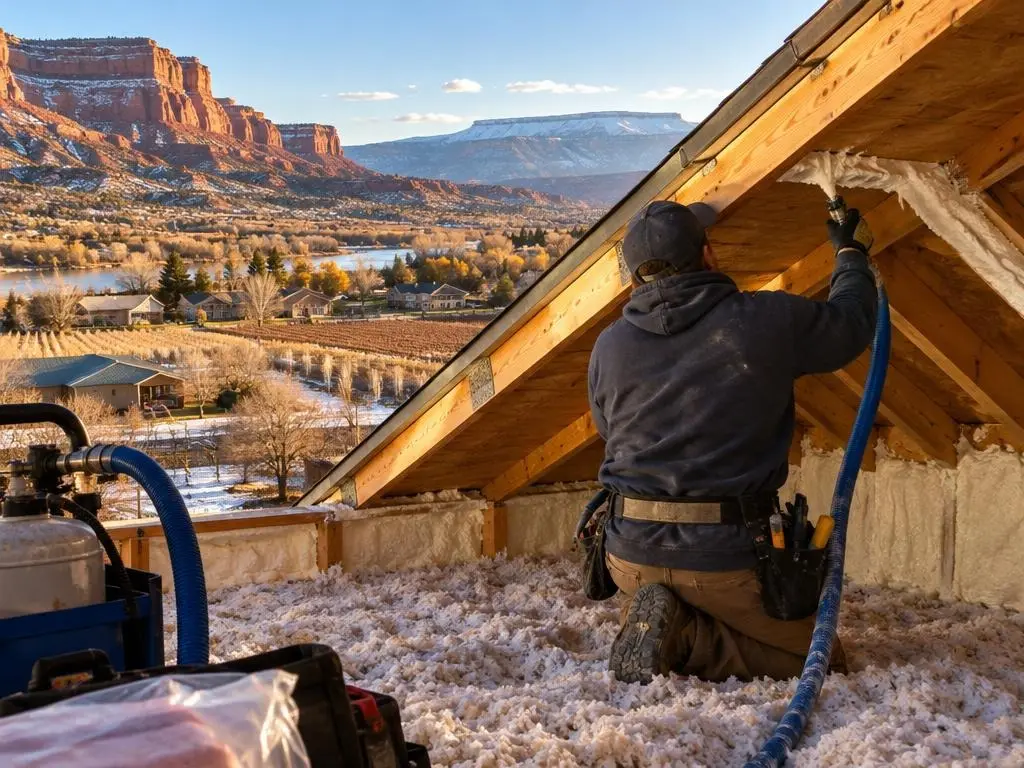
For most open attics, sealing the ceiling and blowing cellulose or fiberglass to depth is the best value; HomeGuide lists blown-in at $0.90 to $2.40 per square foot. Foam makes more sense in tight areas: low-slope roofs, kneewalls, cathedral sections and split-level transitions. Fixr lists a foamed attic in an existing home at $2,500 to $12,000.
Call (970) 438-0827 to set up an attic check. Get a free estimate
What an Attic Job Includes
Each item is listed on the quote.
Top plate and chase sealing
Foam, caulk and fire-rated material at the big leaks.
Hatch and stair covers
Insulated, weatherstripped attic access.
Duct boot sealing
Closing gaps where registers meet the ceiling.
Eave baffles
Keeping soffit vents open and the roof deck cold.
Blown-in to depth
Cellulose or fiberglass toward R-49 or R-60.
Foam in tight spots
Kneewalls, low slopes and cathedral sections.
Published Attic Insulation & Air Sealing Costs
| Job | Range and source |
|---|---|
| Attic insulation, average job | $1,000 to $2,700, about $1,800 average (HomeGuide) |
| Air sealing | $350 to $3,000 (HomeGuide) |
| Blown-in, attic | $0.90 to $2.40 per sq ft (HomeGuide attic guide) |
| Spray foam on the attic floor | $1,100 to $6,800 (HomeGuide) |
| Spray foam on the roof deck | $1,500 to $9,000 (HomeGuide) |
| Spray foam, attic (existing home) | $2,500 to $12,000 (Fixr) |
| Old insulation removal | $1 to $2 per sq ft (HomeGuide) |
HomeGuide's attic guide (January 2026) and Fixr's 2025 guide supply these national ranges. The number of leaks, the depth needed for Zone 5, attic access and any removal change the total. We price after seeing the attic, and the written estimate is what you pay.
How an Attic Job Runs
1. Measure
Check depth, find leaks, look for moisture and pests.
2. Seal
Close top plates, chases, fixtures, boots and the hatch.
3. Baffle
Install baffles at the eaves.
4. Insulate
Blow to the target depth and set rulers.
Why Choose Us for Attic Insulation & Air Sealing
Sealing first
Insulation over open leaks underperforms, especially in winter.
Depth you can see
Rulers stay in the attic.
Ice dam causes addressed
Leaks and venting, not just more insulation.
Attic Insulation & Air Sealing Questions
What R-value should my attic have in Grand Junction?
The 2021 IECC lists R-60 for Zone 5 ceilings. ENERGY STAR recommends R-60 starting from nothing, or adding R-49 over three to four inches.
Will more insulation stop ice dams?
It helps, but air sealing is the bigger part. Heat leaking through gaps is what melts the snow.
Can you add insulation over what I have?
Yes, if it is dry and clean.
How long does an attic job take?
Most take a day, including sealing.
Attic Insulation & Air Sealing Service Areas
- Spray Foam Insulation in Grand Junction, CO
- Spray Foam Insulation in Clifton, CO
- Spray Foam Insulation in Fruitvale, CO
- Spray Foam Insulation in Orchard Mesa, CO
- Spray Foam Insulation in Redlands, CO
- Spray Foam Insulation in Fruita, CO
- Spray Foam Insulation in Palisade, CO
- Spray Foam Insulation in Loma, CO
- Spray Foam Insulation in Mack, CO
- Spray Foam Insulation in Whitewater, CO
- Spray Foam Insulation in Glade Park, CO
- Spray Foam Insulation in Collbran, CO
- Spray Foam Insulation in De Beque, CO
- Spray Foam Insulation in Mesa, CO
- Spray Foam Insulation in Delta, CO
Get an Attic Insulation & Air Sealing Estimate
Book an attic check and we will price sealing and insulation in writing.