
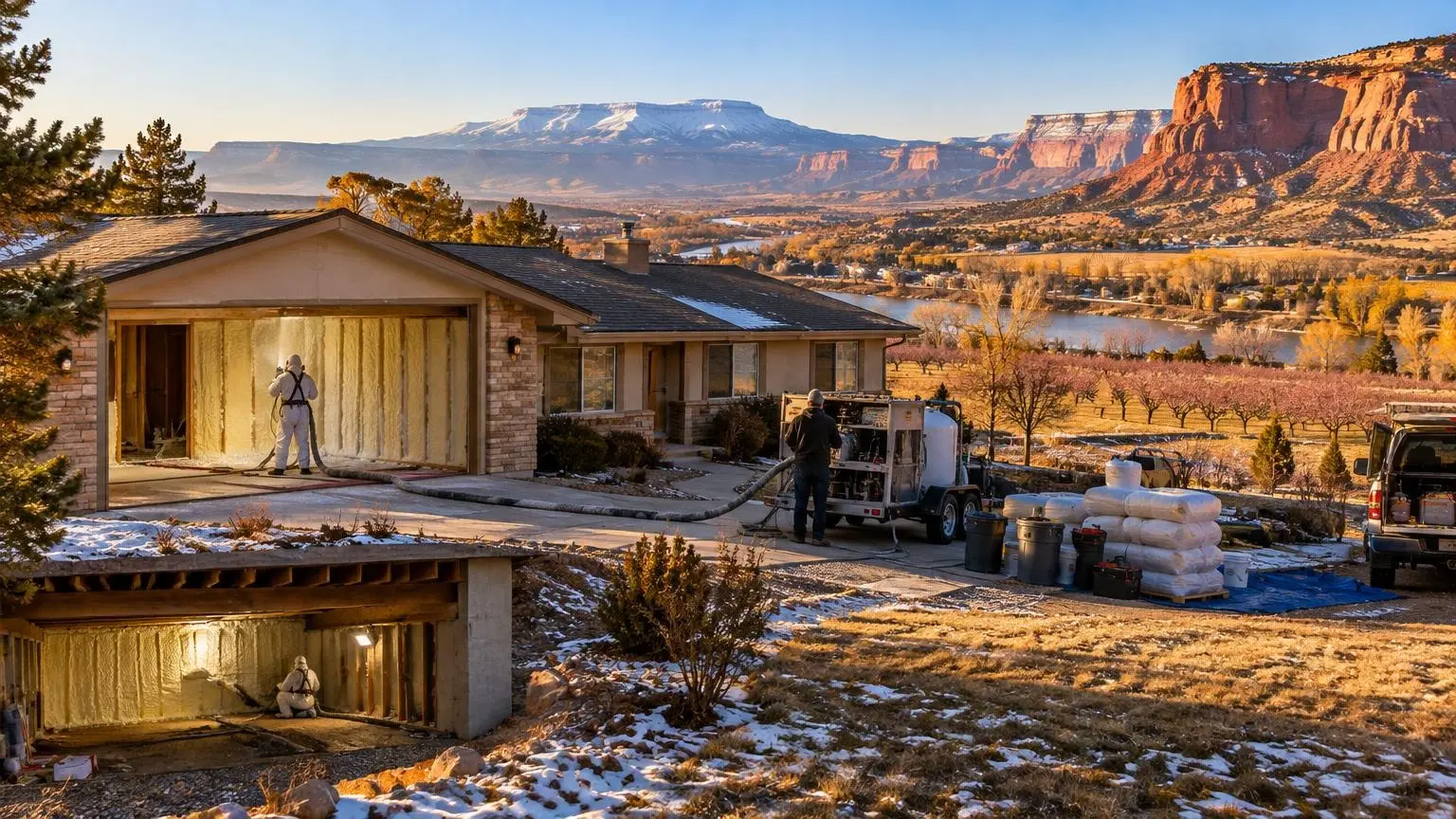
Cellulose and fiberglass
Blown-In Insulation in Grand Junction, CO
Deep, even attic insulation and filled walls without opening them up.
- Free on-site estimates
- Foam type, inches and R-value written out per area
- Air leaks, ducts and moisture checked before we insulate
When Blown-In Is the Right Choice
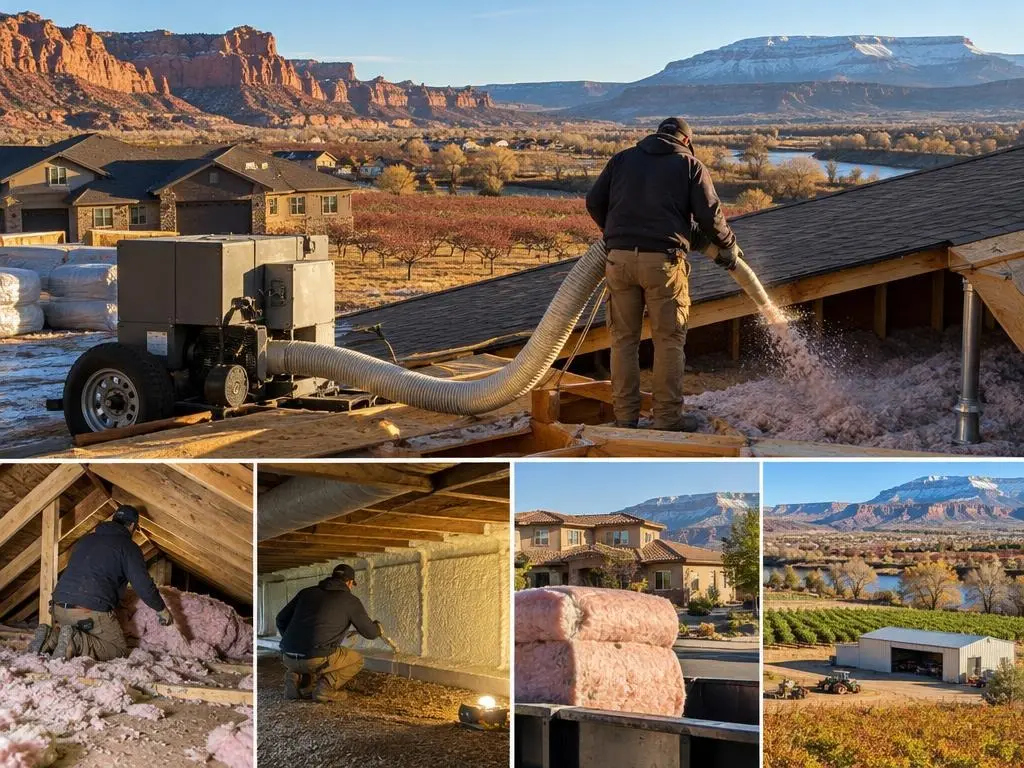
Blown-in insulation is loose cellulose or fiberglass blown through a hose onto the attic floor or packed into closed wall cavities. With Zone 5 calling for R-49 to R-60 in attics, blown-in is usually the most economical way to get there, because adding depth to an open attic floor costs far less per R-value than foam. In most Grand Junction houses, a sealed ceiling with deep blown-in on top is the backbone of a good insulation job.
Cellulose or fiberglass
Cellulose is recycled paper treated for fire and pests. It is dense, fills around wires and framing well and slows air a bit more than loose fiberglass. Fiberglass is lighter, does not absorb water and settles less. Fixr lists blown fiberglass at $1.65 to $2.60 per square foot and cellulose at $1.75 to $3.80. The quote names the product and the depth it needs to reach the target R-value.
Attics
We seal the ceiling first: top plates, chases, fixtures, the hatch and duct boots. Then we install baffles at the eaves to keep soffit vents clear, blow to depth and set rulers so you can check it. ENERGY STAR recommends R-60 for an uninsulated Zone 5 attic and adding R-49 over three to four inches. HomeGuide puts a blown-in attic at $900 to $3,600.
Walls in older homes
Many older Grand Junction houses, especially smaller homes near downtown and early ranch houses, have little or nothing in the exterior walls. Dense-pack cellulose can be blown in through small holes drilled from outside or inside, then patched. HomeGuide lists dense-pack at $1.60 to $4.20 per square foot. We check siding type, fire blocking and old wiring first, since those decide whether it is practical.
Where blown-in falls short
Blown-in does not stop air on its own, cannot go on walls of a crawl space or the underside of a floor, and does not fit cathedral ceilings. Those spots usually need foam. We tell you which applies.
Where Blown-In Goes
Sealing comes first on every attic job.
Attic top-ups
Adding depth over existing dry insulation.
Full attic installs
After removal or in attics with almost nothing.
Dense-pack walls
Cellulose packed into closed wall cavities.
Garage ceilings
Blown-in above garages under living space.
Additions
Hard-to-reach spaces in add-ons and split-levels.
Hatch and baffles
Insulated access covers and eave baffles.
Published Blown-In Insulation Costs
| Job | Range and source |
|---|---|
| Blown-in, per sq ft | $1.00 to $2.80 (HomeGuide); $1.65 to $3.80 (Fixr) |
| Attic | $900 to $3,600 (HomeGuide); $1,750 to $5,500 for about 1,500 sq ft (Fixr) |
| Exterior walls | $1,900 to $7,800, $1.10 to $3.70 per sq ft (HomeGuide); $2,000 to $4,000 (Fixr) |
| Dense-pack cellulose | $1.60 to $4.20 per sq ft (HomeGuide) |
| Fiberglass / cellulose | $1.65 to $2.60 / $1.75 to $3.80 per sq ft (Fixr) |
| Typical job | $800 to $3,000 (HomeGuide); $3,000 to $7,000 (Fixr) |
Ranges from HomeGuide (November 2025) and Fixr (August 2025), both national. Depth for Zone 5, attic access, air sealing and removal set the final figure, and that figure, on your written estimate, is what you pay.
How a Blown-In Job Runs
1. Check
Measure depth, find leaks, look for moisture and pests.
2. Seal
Close the gaps at top plates, chases, fixtures and the hatch.
3. Baffle
Keep soffit vents open.
4. Blow
Bring the attic to the quoted depth and set rulers.
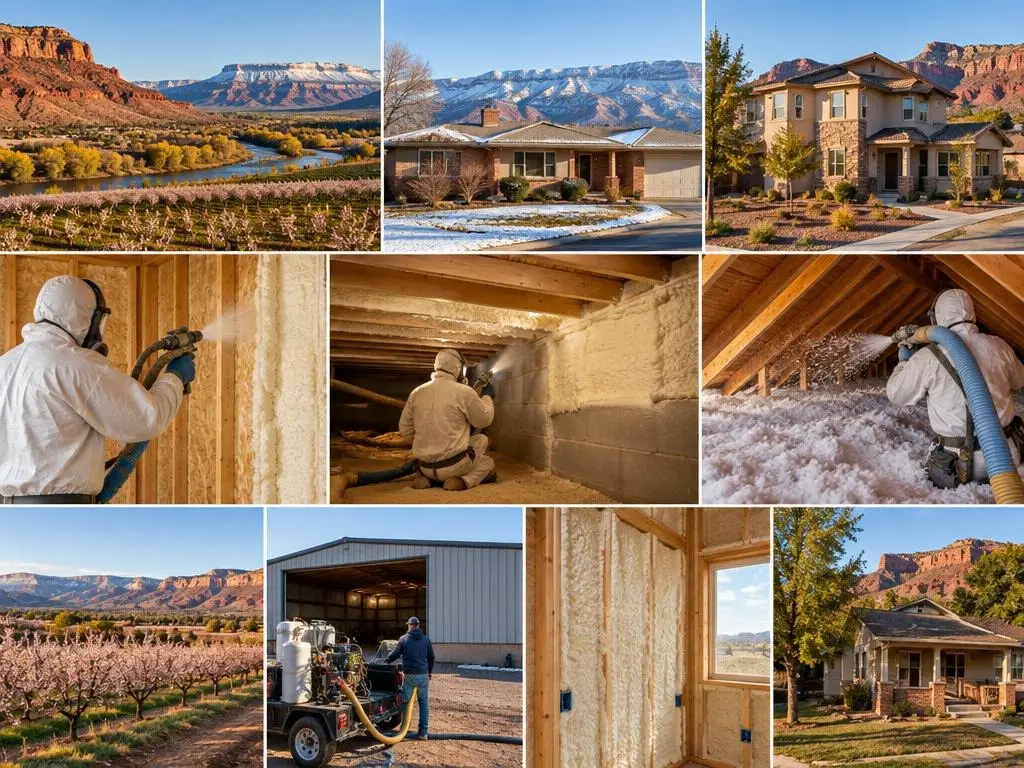
Why Choose Us for Blown-In Insulation
Seal before blow
Every blown-in job starts with air sealing.
Zone 5 depth
Quotes show depth and the R-value it reaches.
Walls without demolition
Dense-pack fills closed walls through small holes.
Blown-In Insulation Questions
How deep should blown-in be for R-60?
It depends on the product; the bag lists the depth for each R-value. We set rulers so you can see it.
Is blown-in better than spray foam for my attic?
In most open attics here, blown-in with good air sealing is the better value. Foam fits tight and odd spaces.
Can you insulate my walls without tearing them out?
Often, with dense-pack cellulose through small holes.
Does blown-in settle?
Some, especially cellulose; installers allow for it by blowing to the initial depth on the bag.
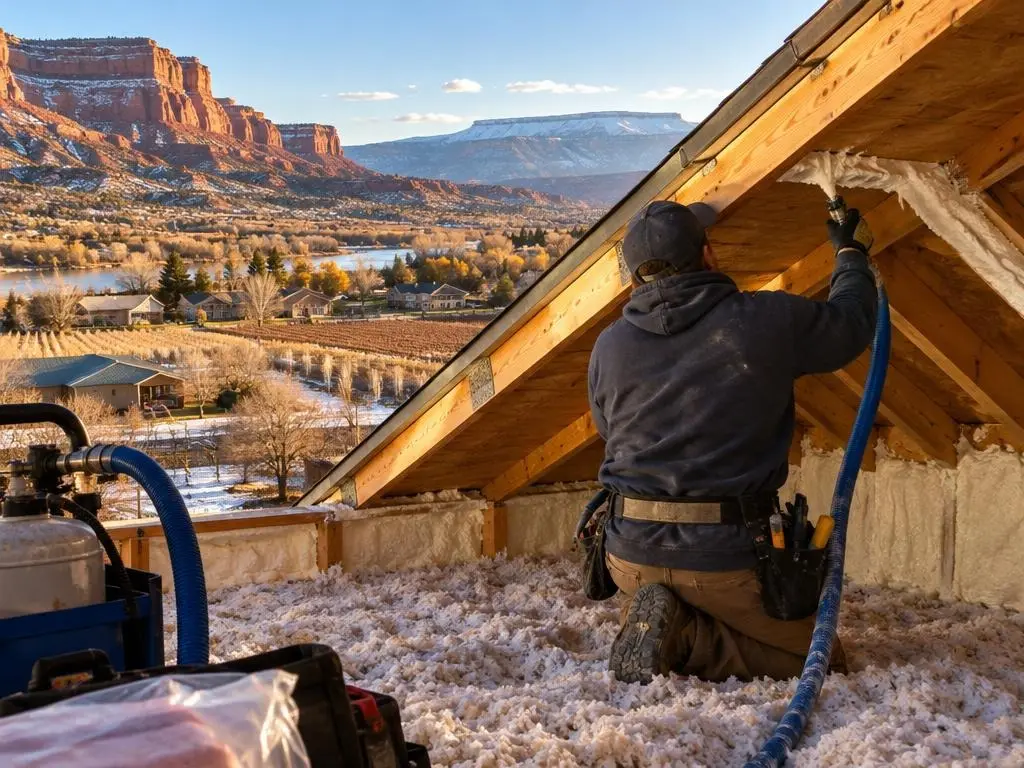
Blown-In Insulation Service Areas
- Spray Foam Insulation in Grand Junction, CO
- Spray Foam Insulation in Clifton, CO
- Spray Foam Insulation in Fruitvale, CO
- Spray Foam Insulation in Orchard Mesa, CO
- Spray Foam Insulation in Redlands, CO
- Spray Foam Insulation in Fruita, CO
- Spray Foam Insulation in Palisade, CO
- Spray Foam Insulation in Loma, CO
- Spray Foam Insulation in Mack, CO
- Spray Foam Insulation in Whitewater, CO
- Spray Foam Insulation in Glade Park, CO
- Spray Foam Insulation in Collbran, CO
- Spray Foam Insulation in De Beque, CO
- Spray Foam Insulation in Mesa, CO
- Spray Foam Insulation in Delta, CO
Get a Blown-In Insulation Estimate
Ask for a blown-in quote and we will measure and price it in writing.